

What Is a
Concrete Overlay?
Transform tired or uneven floors into seamless, high-performance surfaces with our concrete overlay systems. Designed for both refurbishment and new builds, these cement-based concrete overlays deliver the full look and strength of polished concrete - with greater control over colour consistency, finish level and speed of installation.
Leading materials formulated for smooth, durable and beautifully refined finishes. Whether you're creating a full aggregate exposure, a salt-and-pepper aesthetic, or a creamy polished finish, these overlays provide a consistent, architectural result across every project.
Perfect for commercial, retail, education, and residential spaces, our concrete overlay flooring combines performance and design freedom - offering a modern, low-maintenance and sustainable alternative to traditional floor coverings across the UK.

Choose Your System

Create your own seamless Terrazzo floor and turn your dreams into reality. Customize colours, aggregates, aggregate sizes and shapes to suit any aesthetic vision.

Our high-performance, hydraulic-cement-based topping designed for polished decorative floors. It produces a salt-and-pepper appearance with fine aggregate exposure, offering a sleek, contemporary finish for architectural and commercial spaces. Walkable in 3 hours and polishable in 24, it delivers a smooth, high-gloss, durable surface ideal for commercial and domestic floors.

A decorative self-levelling compound with a continuous look. Its mineral formulation allows the creation of vast joint-free areas for all indoor applications, from residential, to commercial and industrial. Without the need to remove the existing floors, this is perfect for new and renovation projects.

A decorative self-leveling topping for indoor and outdoor use. Despite its low minimum thickness of 4mm, it allows for continuous joint-free floor available in a wide choice of colours and a high compressive strength of 40n/mm².
Key Benefits
Before & After


Applications
Concrete Overlay Projects
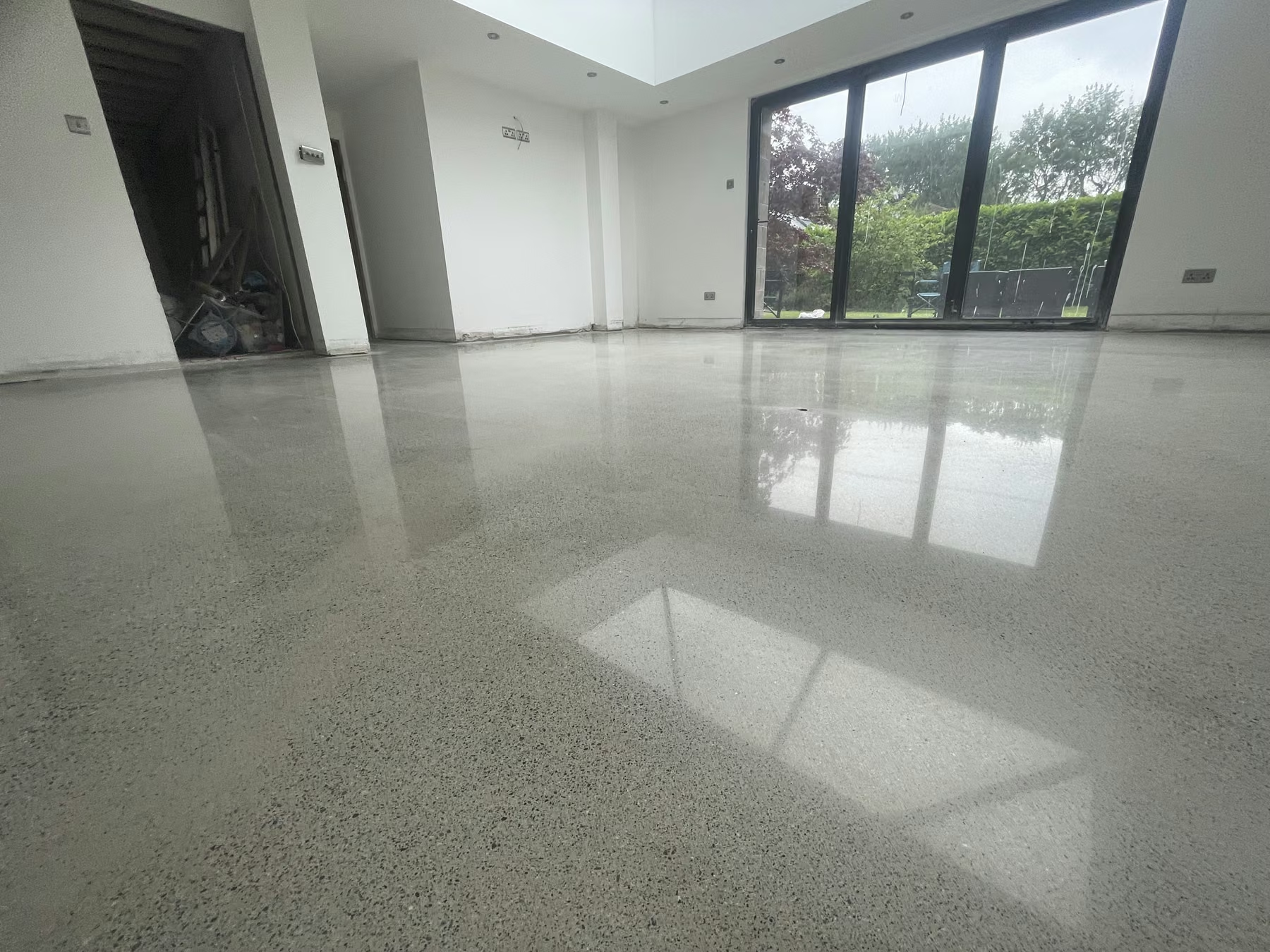
Overlay systems applied over existing floors, in natural, exposed-glass and high-gloss finishes. Each image is labelled with the system and finish used, so you can match what you are looking at to a specification. Select any image to see it full size.




The Installation Process
Yes, in most cases. Tiles must be firmly bonded to the substrate with no hollow areas, cracking or movement. We test adhesion using a hammer tap test and check moisture levels before confirming suitability. If a small number of tiles are loose, we can fix those prior to application. Heavily textured tiles may require additional fill coats.
Yes - concrete overlay systems are highly compatible with underfloor heating. The thin profile (3–10mm) actually performs better than tile for heat transfer. The UFH system must be commissioned and pressure-tested before we start. We run our own temperature and moisture checks as part of the pre-installation survey.
Most domestic projects (up to 60m²) take 3–5 days on site from preparation through to final seal. Self-levelling overlays that require polishing add a day or two. Larger commercial projects are programme-specific - we'll confirm the timeline in your written quotation.
Microcement is a specific type of thin concrete overlay (2–3mm) made from polymer-modified cement, applied in fine layers and sealed with a topcoat. It's particularly popular for walls, stairs and surfaces that need a very fine detail. Thicker overlay systems allow for polishing, aggregate exposure and a more traditional polished concrete aesthetic. We'll advise on the right product for your project at the survey stage.
Cracking in an overlay is almost always caused by movement in the substrate beneath it. This is why thorough substrate assessment is critical - we won't apply an overlay over a substrate that shows signs of active movement or structural instability. If the underlying slab or screed has movement joints, we reflect those through the overlay system. Hairline shrinkage cracks are a natural characteristic of cementitious systems and do not indicate failure.